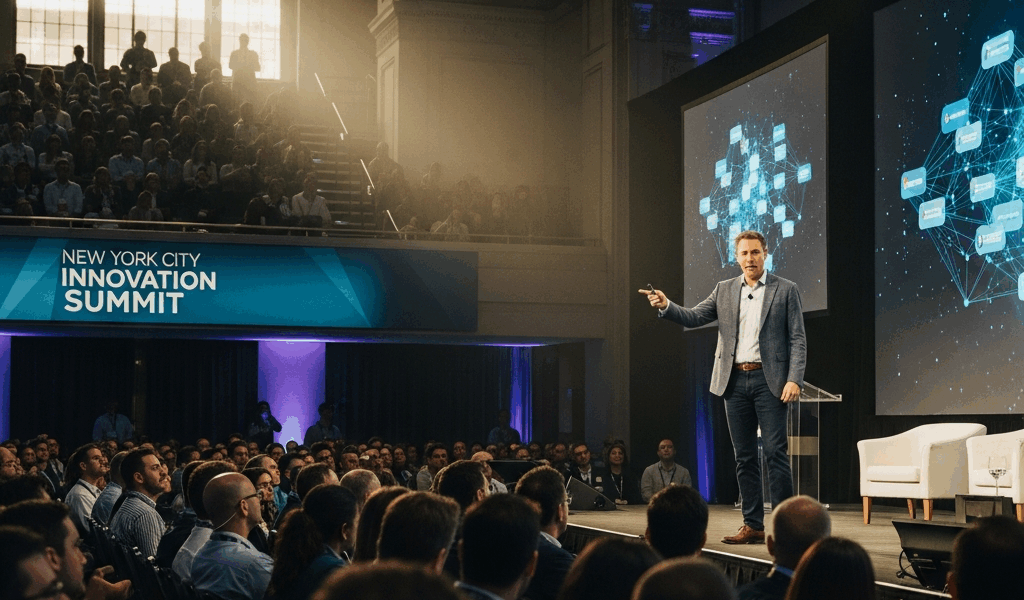
AWS Summit NYC 2023 Key Announcements
AWS conferences have gotten complicated with all the breakout sessions, hands-on labs, and networking opportunities flying around. As someone who’s attended multiple AWS Summits and watched the cloud computing industry evolve through these events, I learned everything there is to know about extracting value from AWS Summit NYC. Today, I will share it all with you.

Keynote Sessions
The keynote sessions are always a highlight. Top AWS executives, including CEO Adam Selipsky, often provide insight into the latest developments and future directions of AWS. They cover key announcements, new services, and major updates to existing services. These aren’t just corporate presentations—they actually reveal what AWS is prioritizing and where the industry is heading.
Breakout Sessions
Breakout sessions dive deeper into specific topics. These sessions are categorized by different tracks such as machine learning, big data, and security. Each session is led by AWS experts and often includes customer stories. This year, the machine learning track showcased innovations in AWS SageMaker. The big data sessions focused on managing and analyzing large datasets using AWS tools. Security track sessions discussed best practices for protecting data and managing compliance—crucial stuff if you’re handling sensitive customer information.
Hands-On Labs
Probably should have led with this section, honestly. Hands-on labs provide a practical experience. Attendees get a chance to work directly with AWS services under the guidance of AWS architects. Labs cover various services, including serverless computing with AWS Lambda and container orchestration with Amazon ECS. This hands-on approach helps in grasping complex concepts more effectively than just sitting through presentations.
Workshops
Workshops offer a relatively longer format, allowing for deeper dives into specific topics. Instructors guide participants through detailed exercises. Workshops on building serverless applications and creating data lakes were particularly popular. These interactive sessions are invaluable for learning through doing—you actually build something rather than just watching someone else do it.
Certification Opportunities
The summit is an excellent opportunity to get AWS certified. Several venues are set up for taking certification exams right at the conference. Special discount codes are often provided to summit attendees. The certifications validate your cloud expertise and are widely recognized in the industry—they actually matter to hiring managers.
Partner Expo
The partner expo features numerous AWS partners showcasing their solutions. Companies like Datadog, Splunk, and Snowflake often exhibit their products. You get to see how these third-party solutions integrate with AWS services. This is also a good chance to discuss potential business partnerships and discover tools you didn’t know existed.
Networking
That’s what makes AWS Summit endearing to us developers—the networking opportunities are genuine and valuable. Various networking lounges and events facilitate connection with peers from different industries. Both structured networking events and informal meetups are available. These interactions can lead to valuable professional relationships and collaborations. I’ve made connections at summits that turned into job opportunities and consulting gigs.
Customer Stories
Customer stories are an essential part of AWS Summit. Companies share their cloud journey, highlighting challenges and solutions. These stories provide insights into real-world applications of AWS services. This year, a prominent retailer discussed migrating a vast on-premises infrastructure to AWS—including all the problems they hit along the way. A healthcare provider showcased their usage of AWS for telemedicine services, which became critically important during the pandemic.
Developer Lounge
The developer lounge is a place for developers to unwind and share experiences. Coding challenges and short talks are typical activities here. You can also find AWS experts available for one-on-one technical discussions. It’s a great place to get answers to specific technical questions without having to wait for a formal Q&A session.
Startup Central
Startup Central is dedicated to early-stage companies. AWS provides resources and mentorship to these startups. Sessions focus on scaling applications and managing growth using AWS services. You can meet and learn from fellow entrepreneurs and AWS solution architects specializing in startups. If you’re running a startup, this area is worth prioritizing—the advice here can save you from expensive mistakes.
Swag and Giveaways
The event atmosphere is enhanced with ample swag and giveaways. T-shirts, stickers, and gadgets are commonly distributed. Although these perks aren’t the main reason to attend, they add a fun element to the summit experience. My closet has more AWS t-shirts than I’d like to admit.
Expert Panels
Expert panels cover various subjects, from future tech trends to industry-specific solutions. Panelists include industry leaders and AWS experts. Discussions are lively and informative. This format allows for a more dynamic exchange of ideas than traditional presentations—you get multiple perspectives rather than just one person’s view.
AI and Machine Learning
AI and machine learning sessions remain a focal point. AWS offers numerous services in this area, and the summit is an ideal platform to explore them. Sessions examine how machine learning models are trained and deployed on AWS infrastructure. Case studies from diverse sectors underscore the practical impact of these technologies—this isn’t just theoretical AI, it’s what companies are actually using in production.
Innovation Hub
The Innovation Hub is where cutting-edge AWS projects are featured. You can witness technologies that are still in development. This includes early-stage services and unique use cases implemented by AWS’s most innovative clients. Demonstrations here offer a glimpse into the future of cloud computing. It’s like seeing what’ll be mainstream in two years.
Community Heroes
Community Heroes are individuals recognized for their contributions to the AWS community. Heroes often lead sessions and workshops, sharing their experiences. Their involvement enriches the summit by adding a community-driven perspective to the learning and networking opportunities. These folks are genuinely passionate about AWS and love sharing knowledge.
Code Demos
Live code demos illustrate AWS service capabilities in real-time. Presenters walk through deploying services, coding serverless functions, and setting up pipelines. These demos provide a concrete understanding of how to implement AWS solutions. Watching someone actually code rather than just showing slides makes a huge difference in comprehension.
Sustainability
Sustainability is an increasingly important topic at AWS Summit. Sessions focus on how AWS services can help reduce carbon footprints and improve energy efficiency. Renewable energy credits and sustainable architecture designs are explored. For companies with sustainability commitments, these sessions provide actionable strategies.
Industry Focus
Industry-specific tracks address unique challenges and opportunities in various sectors. Healthcare sessions often focus on data security and compliance—HIPAA compliance is no joke. Financial services tracks emphasize regulatory requirements and data analytics. Each industry has its sessions tailored to specific goals and challenges.
Feedback and Q&A
Engagement is encouraged at the summit, with ample opportunities for feedback and Q&A. Most sessions include a time for attendees to ask questions. AWS staff and presenters are approachable, ensuring you can clarify doubts or seek deeper insights. Don’t be shy about asking questions—that’s what these sessions are for.
Accessibility
Accessibility is a priority at AWS Summit. Efforts are made to ensure that all sessions and activities are inclusive. Venues are designed to accommodate participants with disabilities. Live captioning and sign language interpreters are often available for key sessions. AWS takes this seriously, which is appreciated.
Developer Tools
Developer tools remain a popular topic. Sessions cover updating toolsets, integrating services, and streamlining workflows. Tools like AWS CloudFormation, CodePipeline, and CodeBuild are frequently discussed. These sessions are practical, with many tips on enhancing productivity—actual techniques you can implement Monday morning.
Serverless Computing
Serverless computing continues to be a significant focus. AWS Lambda, API Gateway, and other serverless services are topics of numerous sessions. These services enable developers to build and run applications without managing servers. Serverless architectures allow for rapid scaling and cost efficiency—you only pay for what you use.
Data and Analytics
Data and analytics sessions provide in-depth knowledge on handling large datasets. Topics include data lake formation, ETL processes, and visualization techniques. Tools such as Amazon Redshift, QuickSight, and Glue are frequently covered. Presentations include practical advice on optimizing data workflows.
Well-Architected Framework
Sessions on AWS’s Well-Architected Framework are invaluable for building robust solutions. The framework provides best practices across five pillars: operational excellence, security, reliability, performance efficiency, and cost optimization. Following this framework can significantly enhance the quality of your workloads. It’s basically distilled wisdom from thousands of AWS deployments.
Hybrid Cloud Solutions
Hybrid cloud solutions are increasingly sought after. AWS Outposts and VMware Cloud on AWS are popular topics. Sessions explain how these services extend AWS’s infrastructure to on-premises environments. This allows for seamless integration and consistent operations across cloud and local data centers—critical for companies that can’t move everything to the cloud immediately.
Leadership Sessions
Leadership sessions cover strategic insights and high-level trends. These sessions are beneficial for business executives and decision-makers. Topics often include digital transformation, innovation strategies, and future technology trends. Less technical, more strategic—aimed at folks making business decisions rather than writing code.
Cost Management
Cost management is crucial for businesses using cloud services. AWS provides numerous tools to monitor and optimize expenses. Sessions on cost management help attendees understand how to use services like AWS Cost Explorer and Trusted Advisor effectively. This knowledge is essential for maintaining budget discipline while scaling operations. Cloud costs can spiral out of control quickly if you’re not paying attention.
IoT
The Internet of Things (IoT) is a growing field with significant focus at the summit. AWS IoT services allow for managing connected devices at scale. Sessions cover device management, data processing, and security. Real-world use cases highlight the transformative impact of IoT solutions.
Blockchain
Blockchain sessions explore how AWS is enabling blockchain applications. The AWS Blockchain Templates simplify the setup and deployment process. Use cases range from supply chain management to digital identity verification. These sessions provide practical insights into integrating blockchain into various industries—though blockchain hype has died down considerably from a few years ago.
Containers
Containers are a pivotal part of modern application development. AWS offers multiple services for container orchestration, including Amazon ECS, EKS, and Fargate. Sessions cover the deployment, scaling, and management of containerized applications. Containerization helps in achieving higher efficiency and consistency in application development.
Virtual Reality (VR) and Augmented Reality (AR)
Sessions on VR and AR are less common but equally impactful. AWS services support the development of immersive experiences. These technologies have applications in gaming, training, and virtual tours. Demonstrations show how AWS enables high-performance VR and AR solutions.
Edge Computing
Edge computing sessions focus on processing data closer to its source. AWS services like AWS Greengrass and edge locations facilitate this. Use cases include real-time data analysis in remote locations. This approach reduces latency and enhances performance for critical applications—essential for things like autonomous vehicles or industrial automation.
Case Studies
Case studies from various industries offer detailed insights. These sessions typically include a problem statement, solution architecture, and outcomes. They provide a valuable learning experience by showcasing successful implementations of AWS services. You learn what actually works in production, not just theory.
Cloud Migration
Cloud migration remains a critical topic. Sessions cover strategies for migrating on-premises workloads to the cloud. Tools like AWS Migration Hub, DMS, and SMS are highlighted. Real-world examples provide practical guidance on overcoming common challenges in migration—because migration is always harder than it looks.
DevOps
DevOps practices are crucial for efficient development and operations. Sessions emphasize automation, continuous integration, and continuous deployment (CI/CD). Tools like AWS CodePipeline, CodeDeploy, and CodeBuild are frequently discussed. Implementing DevOps practices helps in improving collaboration and speeding up delivery cycles.
Mobile Development
Mobile development sessions focus on building scalable backend services for mobile applications. AWS Amplify and AWS AppSync are often highlighted. These tools simplify the development process and enable real-time data synchronization. Attendees learn how to create robust mobile applications with minimal backend management.
Gaming
Sessions on gaming explore the use of AWS services in game development. AWS GameLift is a popular topic for hosting game servers. Case studies from leading game developers provide insights into managing large-scale games. The focus is on scalability, performance, and cost-efficiency—games can have wildly variable traffic patterns.
Quantum Computing
Quantum computing is an emerging area covered at the summit. AWS Braket is the service that supports quantum computing research. Sessions often include demonstrations of running quantum algorithms. This technology holds potential for solving complex problems beyond the reach of classical computing—though practical applications are still mostly future-looking.
Future Directions
Future directions and emerging technologies are explored in forward-looking sessions. Topics include advancements in AI, new architectural paradigms, and upcoming AWS service launches. These sessions provide a glimpse into the evolving landscape of cloud computing.
Preparing for Your First AWS Summit Experience
Attending your first AWS Summit can feel overwhelming given the sheer number of sessions and activities available. Proper preparation maximizes the value you extract from the event. Start by reviewing the session catalog two to three weeks before the event and creating a personalized agenda. Don’t try to attend everything—you’ll burn out.
Registration and Badge Pickup
Registration typically opens several months before the event. Early registration ensures you secure a spot, as popular summits often reach capacity. Badge pickup lines can be long on the first morning, so consider arriving during the pre-registration period the evening before if available. Your badge serves as access to all sessions, expo areas, and networking events.
Session Selection Strategy
Sessions fill up quickly, especially the hands-on labs and workshops with limited seating. Reserve your spots in high-demand sessions as soon as registration opens. Build a backup plan by identifying alternative sessions in each time slot in case your primary choice is full or gets canceled. I’ve been shut out of popular labs before—having a plan B matters.
What to Bring
Bring a laptop if you plan to participate in hands-on labs or workshops. Ensure your AWS account is set up and you have the necessary permissions before arriving. Bring a portable charger for your devices—long event days drain batteries quickly. Comfortable shoes are essential as you will walk considerable distances between sessions and expo areas. The Javits Center is massive.
AWS Summit NYC Venue and Logistics
The NYC summit typically takes place at the Jacob K. Javits Convention Center in Manhattan. This massive venue spans multiple levels with numerous session rooms, expo halls, and common areas. Understanding the layout beforehand saves time navigating between sessions.
Transportation Options
The Javits Center is accessible via multiple transit options. The 7 train stops at Hudson Yards, a short walk from the venue. Several bus lines serve the area. Ride-sharing services are convenient but expect surge pricing during arrival and departure times. If driving, the convention center has parking facilities, though they fill up quickly.
Nearby Accommodations
Hotels in the Hudson Yards and Hell’s Kitchen neighborhoods offer convenient access to the venue. Booking several months in advance is advisable as rooms fill up quickly during the summit. The summit itself does not provide accommodation assistance, so early planning is essential for securing reasonable rates.
Food and Refreshments
The summit provides complimentary breakfast, lunch, and snacks throughout the day. However, lines can be long during peak meal times. Consider eating slightly before or after the designated meal times to avoid crowds. The expo hall often has sponsored refreshments available throughout the day.
Maximizing Networking Opportunities
The networking potential at AWS Summit is one of its most valuable yet underutilized aspects. Many attendees focus solely on sessions and miss opportunities to connect with peers, potential employers, and industry experts. This is a mistake—sometimes the conversations between sessions are more valuable than the sessions themselves.
Structured Networking Events
AWS organizes specific networking sessions throughout the event. These include birds-of-a-feather sessions where attendees with similar interests gather for discussions. Speed networking events pair you with other professionals for brief introductions. These structured formats reduce the awkwardness of approaching strangers.
Unstructured Networking Tips
Some of the best connections happen organically in common areas, coffee lines, and expo halls. Prepare a brief introduction about your role and what you are working on. Ask open-ended questions about other attendees’ projects and challenges. Exchange LinkedIn connections rather than business cards—digital connections are more likely to persist.
Following Up After the Event
The real value of networking materializes after the event. Send personalized LinkedIn connection requests within 48 hours while memories are fresh. Reference something specific from your conversation. Suggest a follow-up call if you identified potential collaboration opportunities.
Post-Summit Learning and Implementation
The summit provides a tremendous amount of information in a short time. Without proper follow-up, most of what you learn fades within weeks. Establish a post-summit learning plan before you attend.
Session Recordings
Most keynotes and breakout sessions are recorded and made available online after the event. Create a list of sessions you missed or want to review. Set calendar reminders to watch one recording per week in the months following the summit. This spaced repetition reinforces learning better than watching everything immediately.
Hands-On Practice
For technical topics, practice is essential for retention. Replicate the demos and lab exercises in your own AWS account. Extend the examples with your own use cases. Document your experiments in a personal knowledge base or blog for future reference.
Team Knowledge Sharing
If your organization sent multiple people, organize a knowledge-sharing session within two weeks of returning. Each attendee presents their top three takeaways and recommendations. This multiplies the value of attendance across the team and helps prioritize which new services or practices to adopt.
AWS Summit Compared to re:Invent
AWS hosts multiple event types, and understanding the differences helps you choose which to attend. The NYC Summit is one of many regional summits held globally each year. AWS re:Invent is the annual flagship conference held in Las Vegas.
Scale and Duration
Summits are typically one-day events with thousands of attendees. re:Invent spans five days with over 50,000 attendees and thousands of sessions. The summit is more accessible for those who cannot commit to a full week away from work or travel to Las Vegas.
Announcement Timing
Major product announcements typically occur at re:Invent in November or December. Summits focus more on education and adoption of existing services rather than new releases. However, regional announcements and previews sometimes occur at summits.
Cost Considerations
Summits are free to attend, requiring only registration. re:Invent has registration fees exceeding $1,500, plus travel and accommodation costs. For organizations with limited training budgets, summits provide excellent value.
Networking Density
re:Invent offers more diverse networking opportunities simply due to scale. However, summits allow for more focused local connections. Many attendees at the NYC summit work for companies in the greater New York area, making follow-up meetings more feasible.
Common Mistakes to Avoid at AWS Summit
First-time attendees often make predictable mistakes that reduce the event’s value. Learning from others’ experiences helps you avoid these pitfalls.
Overloading Your Schedule
Booking back-to-back sessions without breaks leads to information overload and exhaustion. Build buffer time between sessions for note-taking, bathroom breaks, and processing what you learned. Quality of engagement matters more than quantity of sessions attended.
Ignoring the Expo Hall
Some attendees skip the partner expo entirely, viewing it as purely commercial. While vendors are promoting their products, conversations at expo booths often reveal solutions to problems you face. Many partners offer free trials, discounts, or valuable technical resources to summit attendees.
Passive Attendance
Sitting silently through sessions and leaving immediately limits your experience. Ask questions during Q&A periods. Introduce yourself to the presenter afterward if their topic is relevant to your work. Active engagement creates memorable experiences and valuable connections.
Insufficient Note-Taking
Without notes, you will forget most session content within days. Develop a note-taking system before the event. Focus on capturing key insights, recommended resources, and action items rather than transcribing everything. Review and organize your notes the evening after each day.
Conclusion
AWS Summit NYC represents one of the best free learning and networking opportunities in cloud computing. Whether you’re a developer looking to expand your AWS skills, a business leader evaluating cloud strategies, or an entrepreneur building on AWS, the summit offers tremendous value. With proper preparation, strategic session selection, and active engagement, you can extract far more value than the time investment requires. The combination of hands-on labs, expert presentations, customer case studies, and networking opportunities creates an environment where learning and professional connections naturally emerge. For anyone working with AWS or considering cloud adoption, attending your local AWS Summit is genuinely worthwhile.



Stay in the loop
Get the latest web sme updates delivered to your inbox.