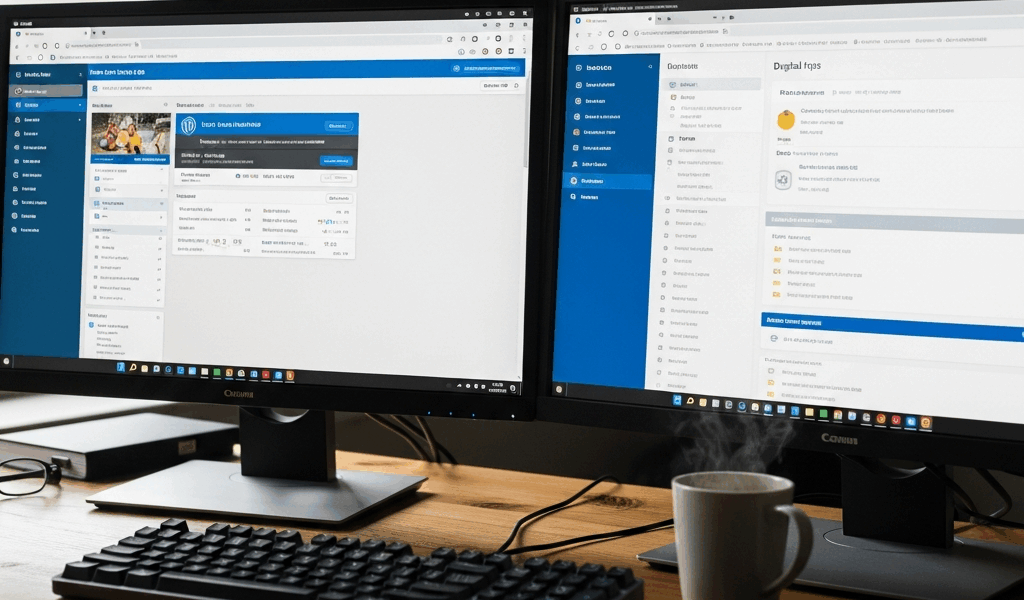
Choosing the right content management system determines how easily you will update your website for years to come. I have migrated businesses between platforms enough times to know that the wrong choice means fighting your tools instead of growing your business. Here is an honest comparison of the major options for small businesses in 2025, based on what I have actually seen work.
WordPress: The Flexible Standard
WordPress powers 43% of all websites for good reason. It handles everything from simple blogs to complex e-commerce stores. The ecosystem of themes and plugins means you can add almost any functionality without custom development. When clients ask me what to use, WordPress is usually my default answer.
The learning curve exists but is not steep. Most business owners can handle basic updates within a few hours of practice. More complex changes – custom functionality or design modifications – typically require professional help. But for everyday content updates, anyone can learn WordPress.
Hosting costs vary from $5 to $100+ monthly depending on your needs. Security and updates fall on you, though managed WordPress hosting handles much of this automatically for an added fee.
Best for: Businesses planning to grow, those who want ownership of their content, sites needing custom functionality.
Squarespace: Design-Focused Simplicity
Squarespace templates are gorgeous out of the box. The drag-and-drop editor makes changes intuitive. If visual design matters more than deep customization, Squarespace delivers. I recommend it often to creative professionals who care deeply about aesthetics.
The trade-off is flexibility. You are limited to what Squarespace allows. Complex functionality requires workarounds or third-party integrations that may break. Moving your content elsewhere means significant export limitations. You are renting your online presence rather than owning it.
Pricing runs $16-49 monthly depending on features. E-commerce plans cost more. Everything is included – hosting, security, updates – but you are on their platform, by their rules.
Best for: Creative professionals, portfolio sites, businesses prioritizing aesthetics over functionality.
Wix: The Middle Ground
Wix offers more flexibility than Squarespace while remaining more approachable than WordPress. The ADI (Artificial Design Intelligence) can build a basic site from your answers to questions. It is impressive technology for getting something up quickly.
Free plans exist but come with Wix branding and ads. Business plans range from $27-59 monthly. The Velo development platform allows custom coding when needed, which gives you more room to grow than you might expect.
Performance has historically been Wix’s weakness, though recent updates have improved this significantly. Site speed now competes with other hosted solutions. The Wix of 2025 is not the Wix of 2018.
Best for: Small businesses wanting balance between ease and flexibility, those testing online presence before committing.
Shopify: E-commerce Specialized
If selling products is your primary focus, Shopify beats general CMS options hands down. Inventory management, payment processing, shipping integrations – it is built for commerce first. I point every product-based business here unless they have specific reasons to go elsewhere.
Content management beyond products is limited. Blog functionality exists but pales compared to WordPress. You are paying for commerce tools whether you need them or not. That is the trade-off for specialized excellence.
Plans start at $29 monthly plus transaction fees unless you use Shopify Payments. The app store extends functionality but costs add up quickly. Budget for apps when calculating total cost.
Best for: Product-based businesses, those prioritizing sales over content marketing.
Webflow: The Designer’s Choice
Webflow combines visual design tools with real CSS output. Designers can build exactly what they envision without writing code, then hand it off to developers who appreciate clean code. It bridges a gap that frustrated web professionals for years.
The learning curve is steeper than other visual builders. You are essentially learning web design concepts through a visual interface. The payoff is pixel-perfect control that other platforms cannot match.
Pricing varies by project needs. Basic sites start around $14 monthly. CMS and e-commerce features add cost. This is not the budget option, but quality rarely is.
Best for: Design agencies, businesses with specific visual requirements, those who want clean code output.
Making Your Decision
Consider these questions:
- Do you need e-commerce? Shopify if yes and it is primary; WooCommerce on WordPress if it is secondary.
- How important is design flexibility? Webflow or custom WordPress for maximum control.
- What is your technical comfort level? Squarespace and Wix for minimal learning curve.
- Do you want to own your content? WordPress gives you complete data portability.
- What is your budget? WordPress can run cheap but varies; hosted builders have predictable costs.
Most small businesses land on WordPress or Squarespace. WordPress when growth and flexibility matter most. Squarespace when simplicity and design take priority. Both are legitimate choices for different situations.
The Migration Reality
Changing platforms later is painful regardless of what sales pages claim. Moving content, redirecting URLs, rebuilding design – it is a project. I have done enough migrations to know that anyone who tells you it is easy is either lying or has never actually done it.
Choose thoughtfully now to avoid this headache later. Start with a clear list of must-have features. Test the actual editor of each platform before committing. What looks good in demos may frustrate you in daily use. Spend an hour with each option before deciding. Your future self will thank you.




Stay in the loop
Get the latest web sme updates delivered to your inbox.