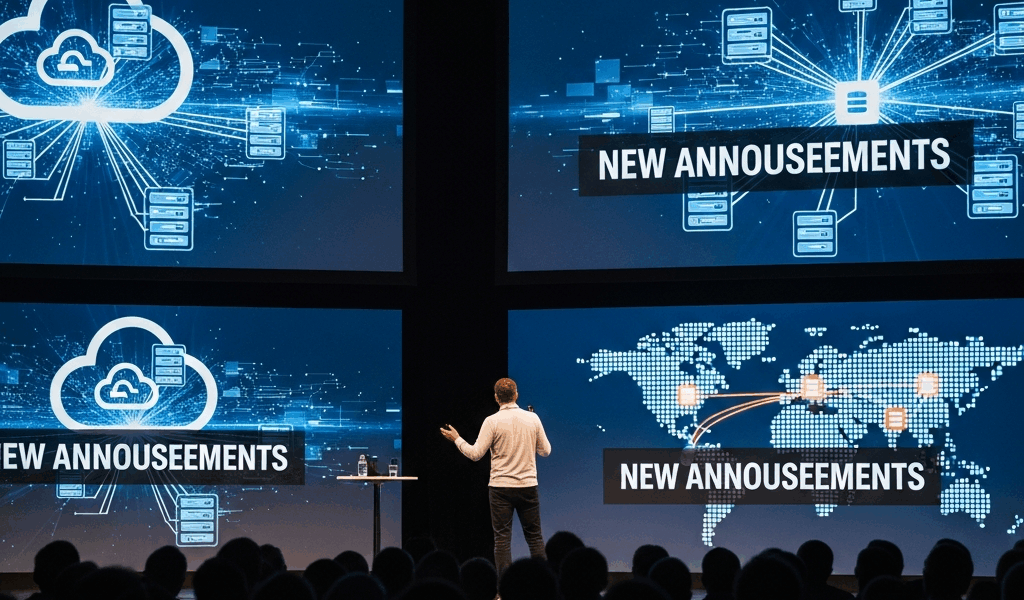
Inside the AWS Summit: Transforming Cloud Computing Landscapes
I have attended AWS Summits in multiple cities over the years, and each one reinforces why these events matter. Amazon Web Services Summit is a global event series aimed at bringing the cloud computing community together. These summits come packed with sessions, keynotes, and exhibitions. They cater to both cloud experts and those just getting started with cloud services.

Understanding the Structure of AWS Summit
The summit typically opens with a keynote address featuring AWS executives, who provide insights on the latest trends in cloud technology. This sets the stage for announcements about new services, tools, and infrastructure advancements. The keynotes alone are worth attending – they give you a sense of where AWS is heading and, by extension, where the industry is going.
Following the keynote, break-out sessions dive deeper into various topics. Attendees can choose from a huge range of sessions tailored to developers, IT architects, and business leaders. These sessions often focus on real-world application stories and demonstrate how AWS can solve specific industry challenges. I always find myself torn between multiple sessions in the same time slot.
Key Themes and Innovations
Every AWS Summit tends to focus on a few key themes aligned with recent innovations. Topics often include serverless computing, artificial intelligence, machine learning, and IoT. The focus reflects AWS’s commitment to expanding these technologies and enhancing their integration into business operations.
Machine Learning: AWS emphasizes its Machine Learning services, showcasing how they streamline data processing and enable predictive analytics. Products like Amazon SageMaker get particular attention for their ability to deploy scalable machine learning models without requiring a PhD in data science.
Serverless Computing: AWS Lambda often takes center stage. Presentations demonstrate how serverless architecture reduces infrastructure management, allowing developers to focus on code rather than server provisioning. This shift has changed how I think about building applications.
Hybrid Cloud: As businesses seek flexible cloud solutions, AWS articulates its hybrid cloud offerings. Services like AWS Outposts enable organizations to run AWS infrastructure on-premises, ensuring security and compliance while using AWS tools and APIs. For regulated industries, this has been a game-changer.
Networking Opportunities
Beyond the formal sessions, AWS Summits provide networking opportunities that honestly rival the educational content. These events gather tens of thousands of attendees, ranging from startups to large enterprises. Participants exchange ideas, discuss challenges, and collaborate on new projects. Some of my most valuable professional connections came from random conversations over coffee at these events.
Exhibition halls feature AWS partners, including technology vendors, consultants, and service providers. Attendees can engage with vendors, see product demonstrations, and discuss potential solutions. The expo hall can feel overwhelming at first, but having a game plan helps.
Workshops and Hands-On Labs
For those looking to enhance their skills, AWS Summits offer hands-on labs and workshops. These are guided sessions where participants can practice deploying AWS solutions. Facilitators with deep industry experience guide attendees through practical exercises using real-world scenarios.
The hands-on labs are consistently popular, providing step-by-step guidance and the opportunity to implement AWS services directly. These practical sessions ensure attendees leave with a robust understanding of how to deploy and optimize AWS services. I always learn more by doing than by watching slides.
Latest Service Announcements
A major highlight of the summit is the announcement of AWS’s latest services. These announcements typically reflect AWS’s ongoing efforts to innovate and meet customer demands. Watching an announcement live and then immediately attending a deep-dive session on that new service is a unique summit experience.
Recent summits have seen introductions like Amazon Timestream, a scalable time series database service, and advancements in AWS quantum computing services. AWS continuously emphasizes its commitment to innovation and its strategy for addressing emerging technology needs.
Security and Compliance
Security remains a crucial concern across all cloud platforms. AWS dedicates sessions to elaborating its security protocols and compliance measures. These sessions aim to assure businesses of the safety and resilience of the AWS environment. Security-focused sessions are always packed, which tells you something about industry priorities.
Key security discussions also cover AWS’s shared responsibility model, outlining AWS’s and users’ roles in maintaining robust security practices. By clearly defining these responsibilities, AWS promotes a better understanding of actionable security measures.
Role of AWS Community
The AWS Community is integral to the AWS Summit experience. Community-led sessions highlight user achievements and creative applications of AWS technology. They present stories of how various organizations are using AWS to solve unique challenges that the official documentation never covers.
User groups, forum moderators, and AWS Heroes offer advice and share experience-driven expertise during these sessions, fostering a spirit of collaboration. The community aspect is crucial, recognizing the contributions of diverse AWS users around the globe.
Industry-Specific Insights
Businesses from various industries attend AWS Summits to learn how cloud solutions can be tailored to specific needs. The summit offers industry-specific sessions, exploring how AWS is applied in sectors such as healthcare, finance, automotive, and media.
- Healthcare: Talks often cover healthcare data compliance, the use of AI in diagnostics, and the secure handling of patient data.
- Finance: Presentations typically highlight stringent data security, risk management, and the use of cloud for financial analytics.
- Automotive: Focus includes autonomous driving technology, IoT applications in vehicle telemetry, and predictive maintenance.
- Media: Discusses video streaming technologies, content distribution networks, and media asset management.
Educational Resources and Certification
Alongside the summit, AWS offers insights into its educational resources and certification programs. AWS Training and Certification is showcased, offering paths to enhance cloud expertise. Certification programs validate skills and expertise in using AWS technology.
These resources are particularly beneficial for IT professionals seeking career advancement. AWS emphasizes the value of these certifications in boosting job prospects and providing tangible proof of cloud proficiency. I have seen certification make real differences in hiring decisions.
Sustainability Efforts
Sustainability is increasingly gaining attention. AWS uses the summit platform to discuss its sustainability initiatives, such as efforts towards carbon neutrality and using renewable energy sources in data centers. Discussions around sustainable cloud practices are aimed at educating attendees on reducing their carbon footprint. This is becoming a real consideration for enterprise purchasing decisions.
Developer Tools and Resources
Developers attending the summit benefit tremendously from exploratory sessions on AWS Developer Tools. Resources like AWS CodeBuild, CodeDeploy, and CodePipeline streamline software development and deployment.
Deep dives into updated tools help developers optimize CI/CD pipelines, improving software releases’ speed and reliability. These sessions focus on practical integration, demonstrating time-saving techniques and efficiency improvements that you can implement the next week at work.
Cost Management Strategies
Ensuring cost efficiency is a priority for AWS users. The summit hosts sessions dedicated to helping businesses optimize their AWS spending. Detailed walkthroughs can help attendees implement effective resource management practices and cost-reduction techniques. Nobody wants to explain an unexpectedly large cloud bill to their CFO.
Discussions often feature AWS tools like Cost Explorer and AWS Budgets, emphasizing monitoring and adjusting resource allocation to minimize expenses without compromising performance.
Feedback and Collaboration
The interactive nature of AWS Summit means attendees have the opportunity to provide direct feedback about AWS services. Feedback sessions often lead to valuable discussions about possible enhancements and future service developments.
Attendees can engage with AWS teams, gaining insights into service roadmaps, and sometimes actively shaping the development of future AWS features and offerings. This feedback loop strengthens the relationship between AWS and its users, promoting continuous improvement.
Detailed Breakdown of Summit Tracks and Session Types
AWS Summits organize content into distinct tracks that help attendees navigate the extensive session catalog. Understanding these tracks helps you plan a schedule that matches your learning objectives and professional focus.
Architecture Track
The architecture track targets solutions architects and technical decision-makers. Sessions cover design patterns for scalability, resilience, and cost optimization. Attendees learn to evaluate trade-offs between different architectural approaches and apply AWS best practices to complex scenarios.
Popular sessions in this track include multi-region disaster recovery design, microservices decomposition strategies, and migration planning for legacy systems. Presenters often share reference architectures that attendees can adapt for their own environments.
Development Track
Developers find detailed technical content in sessions covering specific services, programming patterns, and toolchain optimization. Hands-on coding demonstrations show how to implement features using AWS SDKs in various programming languages.
Sessions typically include live coding where presenters build and deploy applications in real time. Attendees see common pitfalls and debugging techniques that do not appear in documentation alone. These practical demonstrations accelerate learning by showing the complete development workflow.
Operations Track
Operations professionals learn about monitoring, automation, and incident response in this track. Sessions cover CloudWatch configuration, automated remediation using Lambda, and operational best practices from AWS’s own internal teams.
The operations track has grown in importance as organizations adopt DevOps practices. Sessions frequently address how to build self-healing systems, implement progressive deployments, and establish observability across distributed architectures.
Business Leadership Track
Executives and non-technical leaders attend sessions in the business track that focus on cloud strategy, organizational transformation, and return on investment. These sessions translate technical capabilities into business outcomes without requiring deep technical knowledge.
Case studies from enterprise customers demonstrate how cloud adoption impacts revenue, time-to-market, and competitive positioning. Attendees learn frameworks for building business cases and governing cloud adoption across large organizations.
Regional Summit Differences and Global Consistency
AWS hosts summits across dozens of cities worldwide, and while the core experience remains consistent, regional events incorporate local context and priorities.
North American Summits
Summits in San Francisco, New York, Chicago, and other major cities attract heavy enterprise attendance. Sessions often focus on large-scale migrations, multi-account governance, and advanced security compliance. The partner ecosystem is particularly robust at North American events.
European Summits
GDPR compliance and data sovereignty topics receive significant attention at European summits. Sessions address how to architect for European data residency requirements and navigate the regulatory landscape. Local customer success stories feature prominently.
Asia-Pacific Summits
Rapidly growing markets in APAC drive strong startup attendance at regional summits. Sessions often focus on cost optimization for bootstrapped companies and scaling strategies for fast-growing businesses. Localization and multi-language support topics appear more frequently.
Emerging Market Summits
AWS has expanded its summit presence to emerging markets including Latin America, Middle East, and Africa. These events focus on cloud adoption fundamentals while showcasing how local businesses are innovating with AWS technology.
Getting Maximum Value from Your Summit Investment
Attending an AWS Summit represents an investment of time and potentially travel expenses. Strategic planning ensures you extract maximum value from the experience.
Pre-Summit Preparation Checklist
Review the session catalog at least two weeks before the event. Identify priority sessions and alternatives for each time slot. Some sessions reach capacity quickly, so having backups prevents wasted time between sessions.
Set up your AWS account with any prerequisites for hands-on labs. Many labs require specific IAM permissions or pre-provisioned resources. Arriving prepared means you spend lab time learning rather than troubleshooting account access.
Prepare questions for AWS experts and partners you want to meet. Specific questions get better answers than generic inquiries. Research the partners you want to visit in the expo hall so conversations focus on your actual use cases.
During the Event Strategy
Balance session attendance with networking time. Some of the most valuable summit insights come from conversations with peers facing similar challenges. Arrive at sessions early to get good seats and stay after to ask questions.
Take notes that capture action items, not just information. For each session, identify one or two specific things you will implement or investigate further. These actionable notes prevent the information overload that makes post-summit follow-up feel overwhelming.
Collect business cards and connection information systematically. Take photos of expo booth materials you want to remember. The post-event blur makes it easy to forget promising contacts and solutions.
Post-Summit Follow-Through
Within one week of returning, schedule time to review and organize your notes. Prioritize action items and add them to your work tracking system. Contact new connections while the shared experience is fresh.
Share learnings with your team through a formal debrief session. This multiplies the summit’s value across your organization and helps justify future event attendance. Document key insights in your organization’s knowledge base for reference.
Summit Technology and Digital Experience
AWS invests heavily in the technology powering the summit experience itself. The event app, registration systems, and on-site technology demonstrate AWS capabilities while enhancing attendee experience.
Mobile Application Features
The summit mobile app provides session schedules, interactive floor maps, and personalized recommendations. Push notifications alert attendees to schedule changes or special announcements. QR code scanning enables quick session check-ins and contact exchange.
Post-event, the app provides access to session recordings and presentation materials. This content library extends the summit’s value well beyond the event dates.
On-Site Technology Showcases
Demo stations throughout the venue showcase AWS services in action. Interactive displays let attendees experiment with services like Amazon Rekognition, Polly, and other AI/ML capabilities. These hands-on demonstrations often generate more memorable understanding than traditional presentations.
Virtual and Hybrid Options
Recent years have seen AWS expand virtual participation options. Live streaming of keynotes and select sessions enables remote attendance. On-demand content libraries make summit learning accessible to those who cannot attend in person.
The hybrid format has become increasingly sophisticated, with virtual networking features and dedicated content tracks for online attendees. This expansion makes summit knowledge accessible to broader audiences globally.
Building Lasting Professional Relationships at Summits
Beyond immediate learning, AWS Summits create opportunities for professional relationships that compound in value over years. Strategic networking produces referrals, job opportunities, and collaborative problem-solving resources.
Connecting with AWS Team Members
Solutions architects, account managers, and technical advocates attend summits to engage with customers. These relationships can provide ongoing support beyond standard support plans. Knowing the right person to contact accelerates problem resolution and feature requests.
Building Peer Networks
Fellow attendees face similar challenges in their organizations. Connecting with peers in your industry or role creates a support network for shared learning. Many successful AWS professionals credit summit connections with accelerating their careers.
Engaging with Partners
AWS partners often prove valuable for specialized needs. Summit interactions let you evaluate partner capabilities and cultural fit before formal engagements. The informal setting facilitates honest conversations about partner strengths and limitations.




Stay in the loop
Get the latest web sme updates delivered to your inbox.